


Author name: admin

Business

MANDATORY E-INVOICING FOR BUSINESS IN UAE

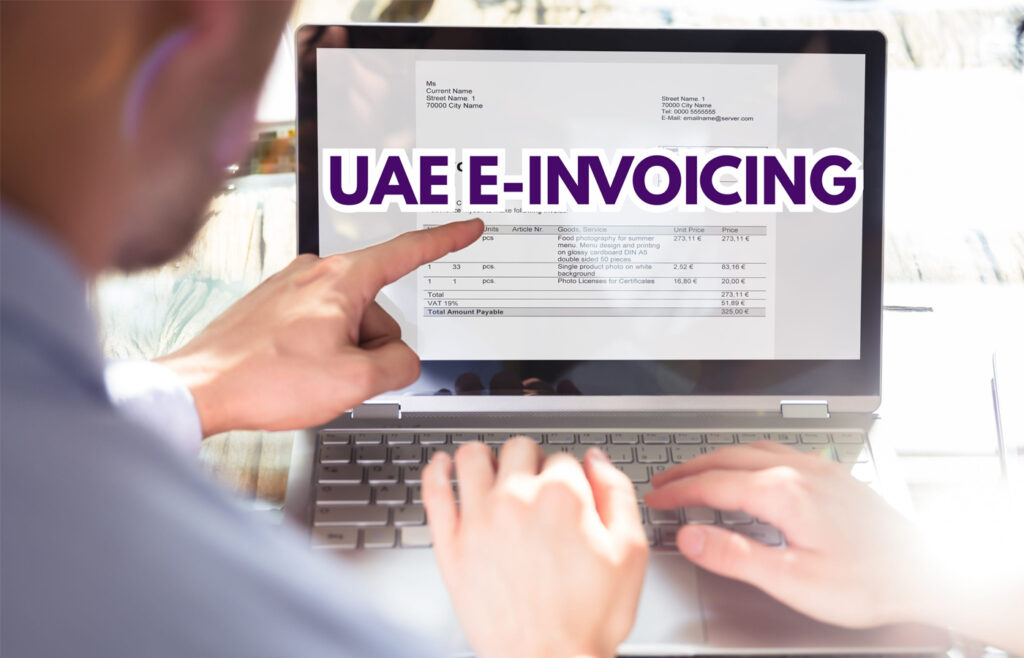
The UAE government has released updated regulations through Ministerial Decision No. 243 of 2025 and Ministerial Decision No. 244 of 2025 on 28th September, which officially set out the phased rollout of the Electronic Invoicing System.  What is e-Invoicing in the UAE? E-invoicing in the UAE involves creating, exchanging, and storing invoices electronically through the government’s new Electronic Invoicing System (EIS). This initiative supports the UAE’s efforts to digitise tax administration, improve VAT compliance, and follow international standards. Why is the UAE moving to e-invoicing? The introduction of e-invoicing supports several national objectives: Strengthening tax compliance and reducing tax gaps through real-time data reporting to the Federal Tax Authority (FTA) Improving business efficiency by reducing manual processing, paperwork, and operational costs Enhancing transparency and enabling faster, more effective audits Supporting sustainability efforts by reducing paper usage Promoting digital transformation and modernising business operations across the UAE  Key Points on UAE e-Invoicing Requirements: Must be issued in structured digital formats (XML or JSON) using UBL or PINT standards. Sent via an Accredited Service Provider (ASP) through the Peppol-based DCTCE 5-corner model. Must be reported and stored in the FTA’s e-Billing System for compliance. Manual or unstructured formats (PDF, JPG, paper) are not accepted as valid e-invoices. Role of Accredited Service Providers (ASPs): Under the new rules, businesses must work with Accredited Service Providers that meet specific standards, including: Must be a member of OpenPeppol. Have a legal presence in the UAE and comply with local laws. Show operational capability with verified client references. Maintain high information security standards (e.g., ISO certification, strong data protection). Implementation timeline Q2 2025: Official enactment of e-invoicing legislation July 2026: Mandatory adoption and live reporting for all taxpayers  e-Invoicing Exemptions in UAE Certain categories of transactions are excluded from mandatory e-invoicing under Article 4 of Ministerial Decision No. 243/2025:  B2C transactions are excluded.  Government transactions done in a sovereign capacity.  International passenger flights with electronic tickets.  Airline ancillary services with an issued EMD.  International air cargo transport (airway bill issued), exempt for 24 months from start date.  VAT-exempt or zero-rated financial services.  Other exclusions as decided by the Minister of Finance Advantages of early preparation  Ensures a smooth transition with fewer disruptions.  Boosts efficiency and can reduce operational costs.  Enables faster payments and clearer cash flow tracking.  Builds trust through transparent, standardized invoicing.  Positions the business as digitally advanced and fully compliant. GSPU Auditing, a dynamic Audit & Accounting firm with 17+ years of international experience provides audit & assurance, accounting & financial, Tax & business consulting, company incorporation & management consultancy services adopting a professional & friendly approach and caring about the success of our clients holding an enviable reputation. Being the Best Auditing Firm & TAX Consultancy in UAE, our well-known & Certified Accountants & Auditors who have international expertise as well as a comprehensive knowledge of the local market work hard with a strong moral commitment and gain the trust of our customers by providing professional services of high quality in an independent, objective and ethical manner obeying Integrity and professionalism. Expert financial and compliance advice for business innovation, success and survival is a basic need for every business. We at GSPU prioritize time and quality in Financial, Accounting, Audit, Company Formation, Management and VAT services to help businesses to grow by making a clear strategy saving time & money by generating more revenue. Your Success, Our Passion. We the Global Strategic Partners Union always welcome your Business & Financial grievances as we make the work into service, and turn customers into friends & client relationships as business partnerships.

Uncategorized

UAE VAT Tax Registration Number: Everything Your Business Needs to Know

What is a Tax Registration Number in the UAE? TRN is a unique number granted by the FTA to entities registered under any tax regime This number must be provided to ensure compliance when executing transactions and must be provided on invoices and other tax-related documents wherever applicable. Why is it Important to Get Your TRN in the UAE? Businesses registered under any tax regime must obtain a TRN. Eligible businesses in the UAE are required to register and apply for a TRN through the Emaratax portal if they meet the eligibility criteria. When a business is registered for VAT, it may receive a TRN, which distinguishes it from others and is used to identify it during FTA procedures. The FTA uses this unique TRN to track the business and its financial transactions to ensure compliance with regulations. What are the Documents You Must Have to Get the TRN? Businesses must maintain several documents during the registration process. The FTA may also request additional documents if it needs more information. Standard required documents include the following: The business incorporation certificate The Memorandum of Association The Articles of Association The copy of the passports of the directors of the business, partners, and authorised signatories The copy of the Emirates ID of the key personnel The copy of the proof of authorisation for VAT registration Contact details Copy of the bank statements  Financial statements Any other documents that would be required as and when demanded by FTA during registration How to Apply for a TRN in the UAE? Sign up for an EmaraTax account on the FTA website and activate it. Log in to your EmaraTax dashboard. Create a new Taxable Person Profile with the required details. Click “View” to open the Taxable Person Account. Under “Value Added Tax”, click “Register.” Fill in the required information and upload supporting documents. Submit the application to receive your VAT TRN after FTA verification and approval.  Why GSPU Auditing? GSPU simplifies your TRN registration by handling the entire process that is documentation, application, and compliance with FTA regulations. With expert guidance and accurate execution, we ensure a smooth, error-free VAT registration experience, allowing your business to stay compliant and focus on growth   GSPU Auditing, a dynamic Audit & Accounting firm with 17+ years of international experience provides audit & assurance, accounting & financial, Tax & business consulting, company incorporation & management consultancy services adopting a professional & friendly approach and caring about the success of our clients holding an enviable reputation. Being the Best Auditing Firm & TAX Consultancy in UAE, our well-known & Certified Accountants & Auditors who have international expertise as well as a comprehensive knowledge of the local market work hard with a strong moral commitment and gain the trust of our customers by providing professional services of high quality in an independent, objective and ethical manner obeying Integrity and professionalism. Expert financial and compliance advice for business innovation, success and survival is a basic need for every business. We at GSPU prioritize time and quality in Financial, Accounting, Audit, Company Formation, Management and VAT services to help businesses to grow by making a clear strategy saving time & money by generating more revenue. Your Success, Our Passion. We the Global Strategic Partners Union always welcome your Business & Financial grievances as we make the work into service, and turn customers into friends & client relationships as business partnerships.

Tax

UAE Corporate Tax & FamilyFoundations: A New Era of Clarity

As the UAE continues to solidify its position as a globally competitive financial hub, the Federal Tax Authority’s latest Corporate Tax Guide on Family Foundations (CTGFF1, May 2025) marks a significant milestone. This comprehensive document provides long- awaited clarity on the Corporate Tax treatment of Family Foundations, Trusts, and similar entities under Article 17 of the UAE Corporate Tax Law. What Is a Family Foundation? For Corporate Tax purposes, a Family Foundation isn’t defined by a specific legal form. Instead, it refers to a foundation, trust, or similar entity that meets specific conditions, mainly serving to manage and preserve family wealth across generations, without engaging in business activities. Entities that meet these criteria can apply to be treated as Unincorporated Partnerships, gaining fiscal transparency and thus avoiding Corporate Tax in their own right. This is a game-changer for estate planning and wealth structuring in the region. Conditions to Qualify To be treated as a Family Foundation under Article 17(1), entities must:1) Benefit natural persons or public benefit entities2) Primarily manage investments or savings3) Avoid business activities (as defined by the Law)4) Not be used for tax avoidance5) Follow special distribution rules when public benefit entities are involved Meeting these criteria allows Family Foundations and even their wholly owned subsidiaries to apply for fiscally transparent status—shifting the tax liability to the beneficiaries instead. Why This Matters Clarity for families, advisors, and trustees managing intergenerational wealth Alignment with international tax standards, while preserving local flexibility Opportunities for compliant structuring for foreign and local family entities Reinforcement of the UAE & competitive advantage in private wealth planning Key Takeaways for Practitioners Family Foundations, even foreign ones, may qualify if they have a nexus in the UAE. Unincorporated Trusts (like DIFC or ADGM trusts) are fiscally transparent by default. Multi-tier structures involving LLCs or SPVs may also benefit—if held by a qualifyingFamily Foundation. Let’s Discuss: How do you see these changes influencing family offices, wealth planners, or trustees operating in the UAE? Are your clients ready to restructure?  Contact us today for expert assistance.https://gspuuae.com/contact-us/

Tax

Withholding Tax in Saudi Arabia for UAE Companies Providing Services

Can UAE Companies Recover WHT from Saudi Arabia—Even If They Pay 0% Corporate Tax? As trade and cross-border services between the UAE and Saudi Arabia grow rapidly, many UAE-based service providers are encountering an unexpected deduction on their invoices: Withholding Tax (WHT) by their Saudi clients. This situation often leads to a pressing question: “If our company pays 0% corporate tax in the UAE, can we still recover the WHT deducted in Saudi Arabia?”The answer is yes. And here’s what you need to know. What Is Withholding Tax and Why Is It Deducted? Under Saudi Arabia’s tax regulations, any payment made by a Saudi-based company to a non- resident entity—even if the service is performed remotely—is subject to WHT, deducted at the source. Common WHT Rates in Saudi Arabia: 5% – Technical or consulting services 15% – Services provided by related parties 20% – Management fees 15% – Royalties and IP-related payments These deductions can significantly impact your profit margins—especially for startups and SMEs operating from the UAE, which historically had no corporate tax until recently. The UAE–KSA Double Taxation Agreement (DTA): Your Path to Relief Thanks to the Double Taxation Avoidance Agreement (DTAA) between the UAE and Saudi Arabia, businesses have two primary ways to reduce or recover WHT: 1. Benefit at Source – Apply in advance to avoid WHT deductions entirely 2. Refund Mechanism – Claim a refund of WHT already deducted through ZATCA (theSaudi Tax Authority) This post focuses on the refund process, especially relevant for UAE companies that either fall under the 0% UAE corporate tax threshold or qualify for Small Business Relief (SBR). Can You Claim a Refund If You Pay 0% Tax in the UAE? Let’s break this down with current UAE Corporate Tax rules: Scenario UAE Corporate Tax Payable? Foreign Tax Credit (FTC) Allowed? How to Apply for a WHT Refund from Saudi Arabia If WHT has already been deducted by your KSA client, here’s how to claim it back: Required Documents: UAE Tax Residency Certificate (TRC) – attested by the Saudi Embassy Form Q/7B – completed by the UAE company Form Q/7C – completed by the Saudi client Copy of WHT return and payment receipt from the client Authorization letter for the client to receive the refund (attested) Attested letter from the client stating that the refund has not been claimed elsewhere Submission Process: 1. The Saudi client submits all documents via the ZATCA online portal2. ZATCA reviews the application, and may conduct an audit 3. If approved, the refund is paid to the client’s bank account, who then transfers it to the UAE company Deadline: Refund claims must be submitted within 5 years of the WHT payment date. Tips for UAE Businesses Working with Saudi Clients Yes, you can recover WHT even if you’re taxed at 0% in the UAE Maintain strong coordination with your Saudi client—they must file the claim Keep thorough documentation: service agreements, TRC, WHT receipts, invoices For future contracts, consider applying for Benefit at Source to bypass WHT altogether Final Thoughts: Don’t Leave Money on the Table Withholding Tax doesn’t have to eat into your profits. UAE companies—regardless of their local tax liability—can fully recover WHT from Saudi Arabia by following the proper procedures under the Double Taxation Agreement. Whether you’re a consultant, marketing firm, tech provider, or freelancer, don’t overlook this opportunity to reclaim what you’ve earned. Need Help with WHT Refunds or Cross-Border Tax Planning? GSPU Tax consultancy can guide you through the refund process and ensure full compliance across borders. Let us help you maximize your profitability and avoid tax surprises. Contact us today for expert assistance.

Business

UAE BUSINESS SECTOR IN 2021

Even though during this Covid-19, UAE has taken its best actions to stabilize the sinking trade markets, there is a significant change in the customer tastes. Normalization of these changes may take a long time. But still after the Covid period will the economy be the same? The global concerts specify this normalization to take a longer time. Also the International Monetary Fund ( IMF), who initially stated a contraction of 2.7% for the GCC raised it to 7.6% in 2020, presently mentions that the business layouts should be adaptable to the customer requirements. Only this can prompt the cautious customers to spend and consume the deals. This is a matter of prior concern as it has impacts on economic health and job security. PRIME CONSIDERATIONS-: The worst contradiction is that the UAE economy is more dependable on the sectors which is most endangered to Covid-19 impression. Corona Virus has made its consequences on industrial markets, tourism and the economy.3/4Rth of the UAE revenue is produced from tourism, hospitality, and international trade sectors. And these sectors are adversely smacked down by Covid Pandemic. This is due to the World-Wide reduction of the creation of energy & its products. The current constraints have restricted the transportation and economical ventures.The present environment is the barrier for airline and hospitality services. Once all these are back to normal, the economy will have a huge rise to its earlier status, we can expect a V-shaped hike (as stated by Mr. Alabbar, Emaar Properties Chairman). OUR PERCEPTION Our Perception is that post Covid Businesses should be carried over only by the in-depth realization of the current situation. The mentioned revert will diversely affect the consumer delights in their consumption. As the current situation was an unpredictable scenario, Business leaders should be adaptable and vigilant to all the scenes. Proper guidance and planning is the key requirement for this.

Business

How To Form Your Company In Abu Dhabi Mainland

Earlier the formation of your business in Abu Dhabi was done by the Department of Economic Development ( an authorized group to assemble and initiate industry along with internal and external trade in the Emirate and prepare researches associated with industrial and commercial activities ) ,with the acknowledgement to the Abu Dhabi Chamber of Commerce & Industry. But now it is an easy-breezy procedure which tempts you to have the footprint of your business in UAE. Different types of Licenses issued under business set up in Abu Dhabi: Commercial License:Issued to owners of companies or establishments for practicing business  activities. Example: (general trading, construction, real estate, transportation, clinics, hospitals, etc).    Issuing Entity: Department of Economic Development Agricultural License:Issued to the owners of agricultural farms, animal production or sea products.     Issuing Entity: Department of Economic Development Professional License:Issued to artisans who personally practice a profession or craft for his own account, relying on his physical effort, or aided by some tools and equipment.     Issuing Entity: Department of Economic Development  Occupational License:Issued to professionals who rely on their abilities, mental and intellectual capabilities, talents and scientific capacities.      Issuing Entity: Department of Economic Development Benefits of forming your trade in Abu Dhabi: UAE welcomes your business with all the facilities of a developed country. Their support and guidance in all aspects is rich in commitment, quality and productivity. They comprises: Free venture set-up Supreme transport facilities. Genuine energies & services. Layout of the art & telecommunications. Civilized funding and assisting department. High-class class hotels, hospitals, schools, shops & Cosmopolitan lifestyle Chief international exhibition and conference arrangements. Qualified office and residential accommodation Our Assistance & Services: Analyze your business & advise the license and formalities to start your company in UAE. Supporting in structuring your trade. Assistance in opening your company & personal bank account. Compliance and Advisory support for VAT Registration Company Liquidation assistance. Guiding to prepare the application form for the DED. Perfect suggestions for selecting ware house/s or offices. Support for adding or deleting a shareholder or Director Getting your trade name approval, Initial Approval and security approval Preparing MOA of the firm. Accounting and Book Keeping services Assistance and advice for E – channel registration and obtaining the establishment card. Visa guidance for staffs & capitalists. Formation of additional documents for the company.(Eg: Certificate of Incumbency, Certificate of Good Standing, etc) Certifying the legal documents from authorized departments for the clients. Staff selection procedures. Perfect auditor appointment suggestion as it is a compliance criteria for having an auditor for free zone companies. Support in modifying the trade name. To expand or shrink firm’s stock holdings. Building business in UAE (Abu Dhabi) is the best decision to perfectly enlarge your profits. We, GSPU TAX CONSULTANCY, with our expert team will surely assist and guide you in all these aspects for the well being of your business and as a relief for your troubles.

Tax

Corporate Tax in UAE starts from June 1st, 2023

The Finance Ministry in the UAE announced the introduction of Corporate Income tax on 31 January 2022. The UAE is a member of the OECD Inclusive Framework on Base Erosion and Profit Shifting (“BEPS”) and is hence committed to meeting the International Standards for tax transparency and preventing harmful tax practices. When Corporate Tax Applicability becomes Effective? The UAE Corporate Tax regime will become effective for financial years starting on orafter 1 June 2023. If a business has a calendar as their financial year, then the Corporate tax shall be effectivefrom 1 January 2024, which is clear. Moreover, as Corporate Income Tax is a Federal Tax, it is implemented across Emiratesuniformly. Corporate Tax Applicability is done to whom? The UAE Corporate Tax regime will apply to all UAE businesses/Commercial activitiesexcept for the extraction of natural resources. If the individuals have ongoing and regular business in UAE, they would be subject toCorporate Tax. Individuals having income from salary/employment income shall not be subject toCorporate Tax. Also, dividends, capital gains, and other income from owning shares/securities earned by individuals in their capacity would not be subject to Corporate Tax. Passive income of foreign investors, i.e., dividends, capital gains, interest, royalties, andother investment returns, may not come under the purview of Corporate Tax. Corporate Tax Rate in UAE Taxable Income Rate of Tax Taxable income up to AED 375,000 0% Taxable income above AED 375,000 9% (on portion of taxable incomeexceeding AED 375,000 For large Multination’s (havingconsolidated business revenues in excessof EUR 750 Million / AED 3.1 Billion) A different Tax Rate. (As per the Guidelinefrom OECD- Pillar 2 it will be minimum15%) Taxable Income as per Corporate Tax The taxable income = Net profit/income of a business prepared following internationallyaccepted accounting standards, subject to certain adjustments as provided by Regulation. The specific exemption would be for Dividends and capital gains earned by a UAE businessfrom its ownership interest subject to specified conditions. Carry forward of losses shall be permitted subject to fulfillment of certain conditions. Credit for the taxes paid in a foreign jurisdiction on UAE taxable income shall be allowed. Tax Group Group of Companies can elect to form a tax group and be treated as a single taxableperson, subject to fulfillment of certain conditions. Intragroup transactions and reorganizations would not be subject to Corporate Tax inUAE, provided necessary conditions are met. Free Zones and Corporate tax applicability Free Zone entities would be subject to Corporate Tax. However, Corporate Tax incentives shall be provided to honor the commitment, and such entities will have to fulfill compliance (registration and filing of Return) obligations. Transfer Pricing – Related Party TransactionUAE businesses will need to comply with transfer pricing rules and documentation requirements set concerning the OECD Transfer Pricing Guidelines to enable Calculations of Corporate Tax as per the Regulation. Corporate Tax – Compliance Registration Required Filing of Return of Income Annually Advance Tax Calculations Payment – Not Applicable Method of Filing Electronic Corporate Tax – Withholding TaxAt present, withholding tax will not be applicable on domestic and cross-border payments of any nature

Business

Charting an Accountant for your Small Business

Small business leaders always desire to stop fixing their financial complexities and concentrate on expanding their business. For this, charting an appropriate accountant ( part-time or full time as per the work ) is a proper solution. What does an accountant do?  Acts as a financial advisor  Do payroll & handle invoices and track payments.  Do Quarter and annual tax filing Provide financial documents for loan and grant WHY? 1. Flawless Financial Statements & RecordsYou can get a review of your company’s financial status. Flawless financial statements and reports are supporting nourishment for your plans and operations for business growth.2. Manage the BusinessYou can work on your business development if there is an efficient accountant to do your accounts. The business will be very smooth if the financials are done perfectly as a major part of business operations are efficiently accomplished.3. Loan & Grant ApplicationFor any application or approvals related to your finances have to be done, all the responsibilities and tasks can be handled by the accountant solely.4. Audit RequirementA perfect accountant can handle all the requirements of an audit perfectly.5. Obey the Tax laws & Magnify your Tax savingsAn efficient accountant takes up the responsibility to magnify your savings by reviewing your financials and obeying the Tax laws. Certified ones can even do the filings.6. Stress-FreeWhen major parts of your business are smoothly handled by an efficient individual then you will be stress-free. WHEN ? Business leaders only hire an accountant when it becomes a complex part to handle the financials. By then there may be no proper financial records or filings may be missed.The best option is to start with a part-time accountant or utilize an accounting firm for the proper financial operations.Recall that the charges you pay an accountant are tax-deductible as a business expense. HOW ? List out your needed tasks. Review the accounting firm or accountant your competitors prefer. Prepare some basic interview questions, some accountants or firms offer a free consultation. Initially make clarity regarding the charges of each task like preparing financial statements & reports, payroll, filings, e.t.c. If you are initiating an accounting mechanism for your business, get their recommendations regarding the software. We, a young and dynamic Audit & Accounting firm in Dubai, with expertise spanning around every area in accounts, tax and other financial branches, adopts a professional & friendly approach and care about the success of our clients holding an enviable reputation. Every business needs expert financial and compliance advises for business innovation, success and survival. We at GSPU have prioritized to offer timely and qualified auditing, accounting & consulting services in order to help businesses to grow by making a clear strategy, by saving time, money & by generating more revenue providing a range of external services such as financial and accounting audits of companies and projects, risk management, inventory management and valuation of tangible business assets. Being the Best Auditing Firm & TAX Consultancy in UAE, and having a strong moral commitment through a group of well-known & certified Accountants & Auditors in Dubai we will take care of your Accounting, Audit, Company Formation, and VAT Services and take the load off . We the Global Strategic Partners Union always welcome your Business & Financial grievances converting work into service, customers into friends & client relationships as business partnerships.

Tax

Corporate Tax comforts for Free zones

A public consultation document has been released by the UAE Ministry of Finance (MoF) inviting comments from stakeholders providing the businesses to play a key role in formulating the UAE Corporate Tax law.Even Though there is no individual income, activities an individual performs with a commercial license will be tax applicable. Companies operating in the natural resource extraction, charities, pension funds, investment funds, e.t.c will be exempted by the Federal government, Emirate government & their departments. UAE Corporate Tax regime will honour the tax incentives currently being offered. Audited financials are a compulsory record for the Corporate Tax system.Corporate Tax is at 0% for the following income sources:  Transactions with businesses located outside the UAE Trading with businesses located in the same or other free zones.  Certain regulated financial services are directed at foreign market goods sale (from VAT Designated Zones) to customers on the mainland if the customers are the importer-on-record. Also, ‘Passive income’ of the FZ company, which does not have any branch on the mainland. ‘Passive income’ includes interest and royalties, dividends and capital gains from owning shares in mainland UAE companies. Income from transactions with group companies located in mainland UAE is also a passive income, but such payments/expenses made by mainland group companies to FZ company will not be a deductible expense.Free zone entities mainland branches will be taxed at the regular tax rate on mainland income. Also, if the free zone entities can be a regional sourcing hub, then the payments made by mainland entities will not be a deductible expenditure.All other Free Zones company’s income sources are likely to be CT subjected. For exact expense allocation & income determination, a robust accounting procedure must be maintained. They can reverse their decision and obey the regular corporate tax rate. We, a young and dynamic Audit & Accounting firm in Dubai, with expertise spanning every area in accounts, tax and other financial branches, adopt a professional & friendly approach and care about the success of our clients holding an enviable reputation. Every business needs expert financial and compliance advice for business innovation, success and survival. We at GSPU have prioritized offering timely and qualified auditing, accounting & consulting services to help businesses to grow by making a clear strategy, saving time, money & by generating more revenue by providing a range of external services such as financial and accounting audits of companies and projects, risk management, inventory management and valuation of tangible business assets. Being the Best Auditing Firm & TAX Consultancy in the UAE, and having a strong moral commitment through a group of well-known & Certified Accountants & Auditors in Dubai, we will take care of your Accounting, Audit, Company Formation, and VAT services and take the load off. We the Global Strategic Partners Union always welcome your Business & Financial grievances converting work into service, customers into friends & client relationships as business partnerships.

Others

Regulations On Anti-Money Laundering And Illegal Organizations

The UAE ministry of Economy has published a report on 24th June 2022, reinforcing the regulations on Anti-money laundering and combating the financing of terrorism and illegal organizations’ and its amendments following Article (44) Clause (3) of ‘Cabinet Decision No.(10) Of 2019.It states the following :“Putting in place the Crime-Combating regulations, instructions and forms for those subject to its supervision, when necessary”.The Ministry of Economy instructs all real estate brokers and agents to undertake the following procedures effective 01 July 2022:1. Purchase and sale transactions of Freehold real estate, according to the description and determination of the law of each emirate, in carrying out any single physical cash transaction or several transactions equal or exceeding AED 55,000 for the entire, or a portion, of the property value: Obtain and record identification documents (Emirates ID, or Passport copy). Obtain and record receipts, invoices, contracts and Purchase & Sale Agreement. Submit a ‘Real Estate Transaction Report’ (“REAR”) via the Financial Intelligence Unit’s (“FIU”) goAML platform. Purchase and sale transactions of Freehold real estate where the method of payment is a virtual asset for a portion or the entire property value:Obtain and record identification documents (Emirates ID, or Passport copy).Obtain and record receipts, invoices, contracts and Purchase & Sale Agreement.Submit a ‘Real Estate Transaction Report’ (“REAR”) via the Financial Intelligence Unit’s (“FIU”) goAML platform. 2. Purchase and sale transactions of Freehold real estate where the method of payment is a virtual asset for a portion or the entire property value: Obtain and record identification documents (Emirates ID, or Passport copy).  Obtain and record receipts, invoices, contracts and Purchase & Sale Agreement.  Submit a ‘Real Estate Transaction Report’ (“REAR”) via the Financial Intelligence Unit’s (“FIU”)  goAML platform. 3. Purchase and sale transactions of Freehold real estate where the funds used to carry out the transaction were converted from a virtual asset for a portion or the entire property value: Obtain and record identification documents (Emirates ID, Passport). Obtain and record receipts, invoices,contracts and Purchase & Sale Agreement. Submit a ‘Real Estate Transaction Report’(“REAR”) via the Financial Intelligence Unit’s (“FIU”) goAML platform. 4. If the buyer or seller are legal person(s), identification documents must include the following: Trade License; Articles of Association; Register of Beneficial Owners; Emirates ID or passport copy for all Beneficial Owners; and Emirates ID or passport copy for all shareholders/partners. 5. If the buyer or seller are natural person(s), identification documents must include the following: Valid Emirates ID or Passport copy 6. Keep records of all documents and information related to the above transactions for minimum period of (5) years 7. Note that submissions of REARs does not exempt you from your existing obligations to submit the following types of reports via goAML: Suspicious Transaction Report (STR); Suspicious Activity Report (SAR); Funds Freeze Report (FFR); Partial Name Match Report (PNMR); High Risk Country Report (HRC); and High Risk Country Activity Report (HRCA).

Scroll to Top